




Rubber engine mounts are one of the most critical yet overlooked components in any engine-powered machine. These deceptively simple parts — a layer of engineered rubber bonded between metal brackets — stand between a smooth, quiet ride and a bone-rattling, component-destroying vibration problem. Whether you are replacing worn mounts on a daily driver, specifying vibration isolators for an industrial compressor, or upgrading engine mountings on a marine vessel, understanding how rubber engine mounts work, what materials they use, and how to select the right one can save you time, money, and mechanical headaches. Use this page as a guide to everything you need to know about rubber engine mounts.
What Are Rubber Engine Mounts and Why Do They Matter?
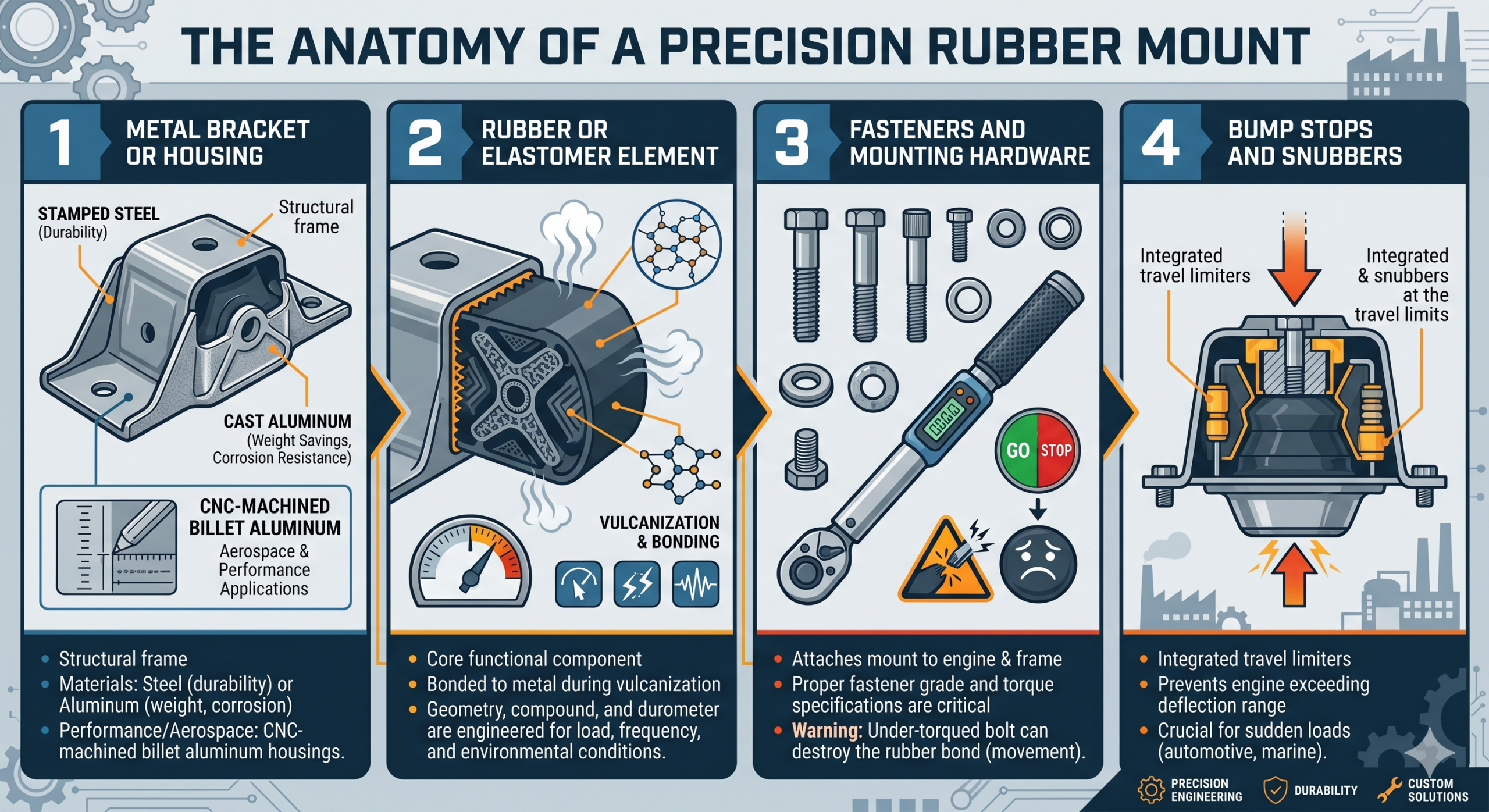
A rubber engine mount is a structural component that secures an engine to a vehicle frame, equipment chassis, or machine base while simultaneously isolating vibration and damping noise. At their core, engine mounts consist of a rubber or elastomer element bonded to metal brackets — typically steel or aluminum — that bolt to both the engine block and the supporting frame.
Every engine mounting serves two purposes: hold the engine firmly in position under all operating conditions, and prevent the engine’s rotational and combustion vibrations from transferring into the surrounding structure. Without rubber mounts, every firing pulse would travel directly through metal-to-metal contact into the frame, cab, and suspension, creating unbearable noise and accelerating fatigue failure in connected components.
Properly engineered rubber engine mounts can reduce 75 to 85 percent of engine vibration before it reaches the frame. That level of isolation protects not just passenger comfort, but also sensitive electronics, bearings, fasteners, and other components that degrade under constant vibrational stress.
How Rubber Engine Mounts Reduce Vibration and Noise
The physics behind rubber engine mounts centers on rubber’s natural elasticity. When an engine fires, it generates oscillating forces at specific frequencies. These forces travel into the rubber element, which deforms under load, converting mechanical energy into a small amount of heat and dissipating the vibrational force before it reaches the frame.
This involves two distinct mechanisms. Vibration isolation reduces the magnitude of transmitted force by introducing a compliant layer between source and receiver. Vibration damping absorbs and dissipates vibrational energy within the rubber material itself. Effective rubber engine mounts provide both.
Durometer rating — measured on the Shore A hardness scale — directly affects mount performance. A softer mount (lower durometer) deflects more under load, providing superior vibration isolation but allowing greater engine movement. A harder mount restricts movement but transmits more vibration. Most engine mounts for standard applications fall in the 40A to 60A range, balancing isolation performance against positional control.
Types of Rubber Engine Mounts
Center Bonded Rubber Mounts
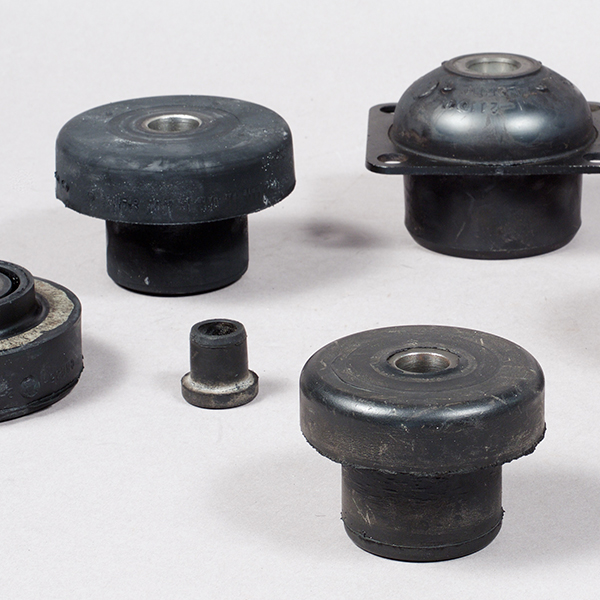
Center-bonded mounts feature a single rubber element bonded to a central metal core, with an outer metal shell or mounting plate. The rubber works primarily in shear and compression, providing consistent isolation across a range of load conditions. These mounts are widely used in stationary machinery, compressor installations, and light industrial equipment where the load is predominantly vertical and vibration frequencies are predictable. Their simple construction makes them cost-effective and easy to replace.
Conical Engine Mounts
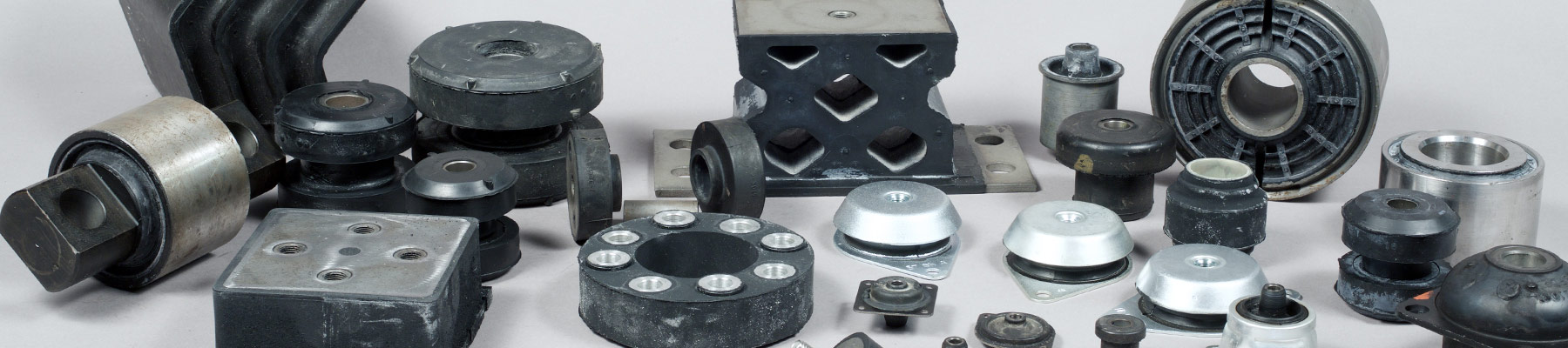
Conical mounts use a tapered rubber element that distributes force evenly across a larger surface area than cylindrical designs. This geometry gives them high load-bearing capacity combined with excellent vibration dampening in all three axes. The tapered shape also provides a natural progressive spring rate — the mount stiffens as deflection increases, preventing bottoming out under sudden load spikes. These mounts are common in heavy equipment, generator sets, and large industrial engines, as well as marine applications where lateral forces from wave action are a factor.
Cylindrical Rubber Mounts (Bobbins)
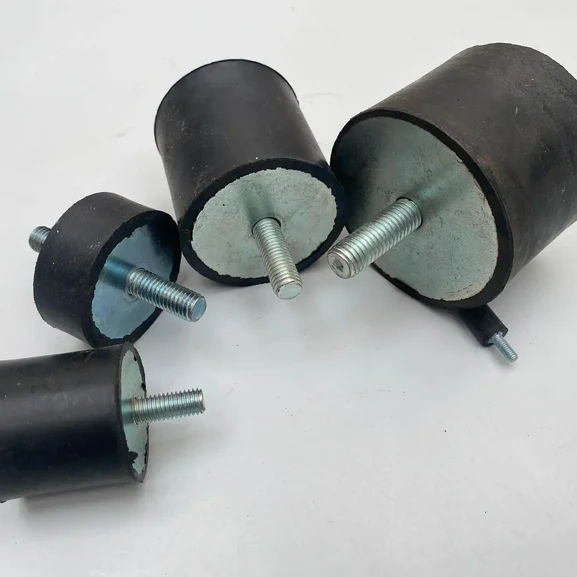
Cylindrical mounts, often called bobbins, are among the most versatile engine mount designs. They consist of a cylindrical rubber element with threaded studs in male-male, male-female, or female-female configurations. Their compact profile makes them suitable where space is limited. Available in a wide range of durometer ratings and load capacities, bobbins handle combined shear and compression loads well and are easy to install with standard fasteners. Many equipment manufacturers use them as their default engine mounting solution for small to mid-size engines.
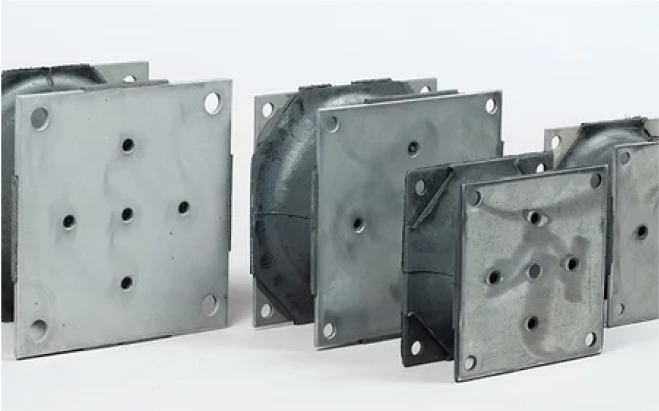
Sandwich Mounts (Plate Mounts)
Sandwich mounts consist of a rubber layer bonded between two flat metal plates. Bolt through the top plate to the engine and through the bottom plate to the frame. This simplicity makes them popular where quick installation and replacement are priorities. Plate mounts excel at isolating vertical vibration but offer less control over lateral movement compared to conical or cylindrical designs. For applications where the primary concern is preventing vibration from transferring to a floor or frame, sandwich mounts are often the most practical and cost-effective choice.
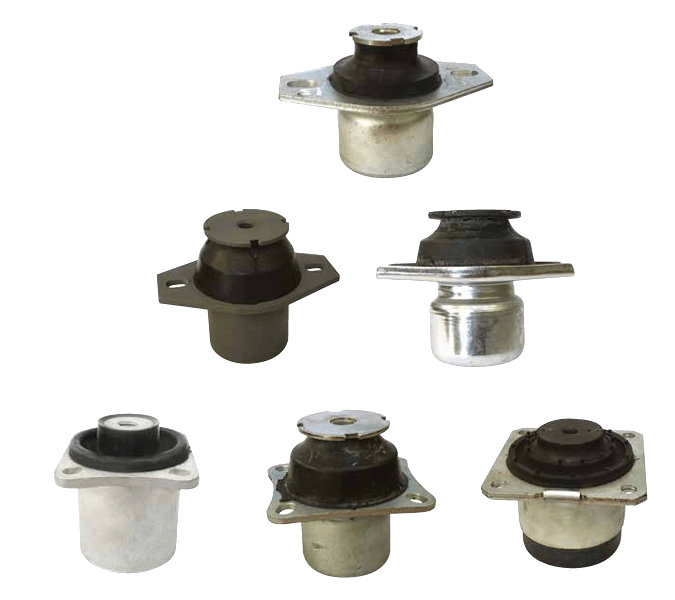
Hydraulic (Hydro) Engine Mounts
Hydraulic engine mounts represent the most advanced vibration isolation technology in common use. These mounts contain two rubber chambers separated by an orifice plate or decoupler, with hydraulic fluid filling the internal cavity. When the engine vibrates, fluid is forced between chambers through the orifice, providing frequency-dependent damping that adapts to changing conditions.
At low frequencies (engine idle), the fluid flows freely through the decoupler, providing soft, compliant isolation. At higher frequencies (road inputs, engine acceleration), the decoupler locks out and the fluid is forced through the orifice, providing firmer damping that controls engine movement. Hydraulic mounts are standard equipment on most modern passenger vehicles and are increasingly common in premium marine installations.
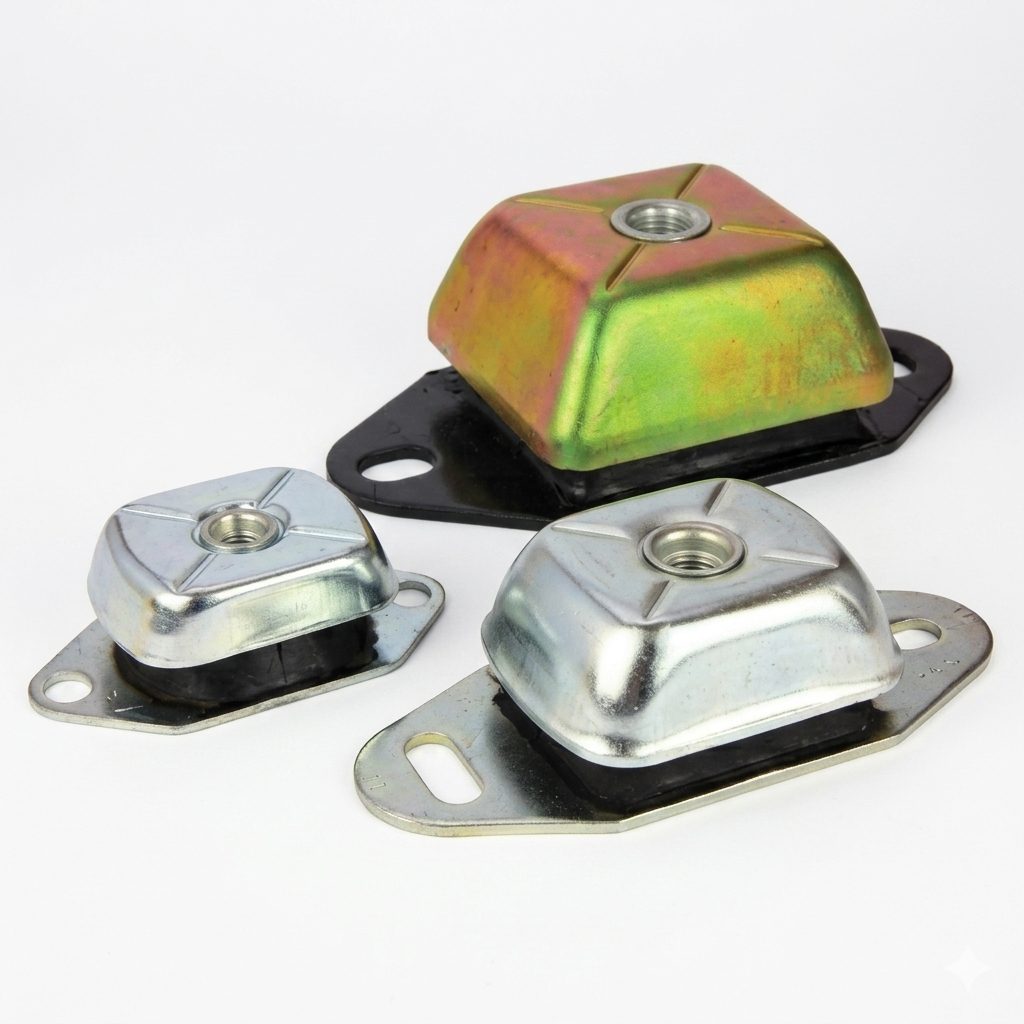
Fail-Safe Marine Engine Mounts
Marine engine mounts face unique challenges: constant vibration compounded by shock loads from wave impact, a corrosive saltwater environment, and the safety-critical requirement that the engine stay in place regardless of conditions. If an engine breaks free on a boat, it can damage fuel lines, exhaust systems, and the hull.
Fail-safe marine mounts are designed with containment features — typically a metal cage or collar that holds the engine in position even if the rubber element completely fails. These mounts meet marine certification standards and are required by many classification societies for commercial vessel installations. Corrosion-resistant materials, including stainless steel fasteners and anodized aluminum housings, are standard for saltwater environments.
Rubber Engine Mount Materials
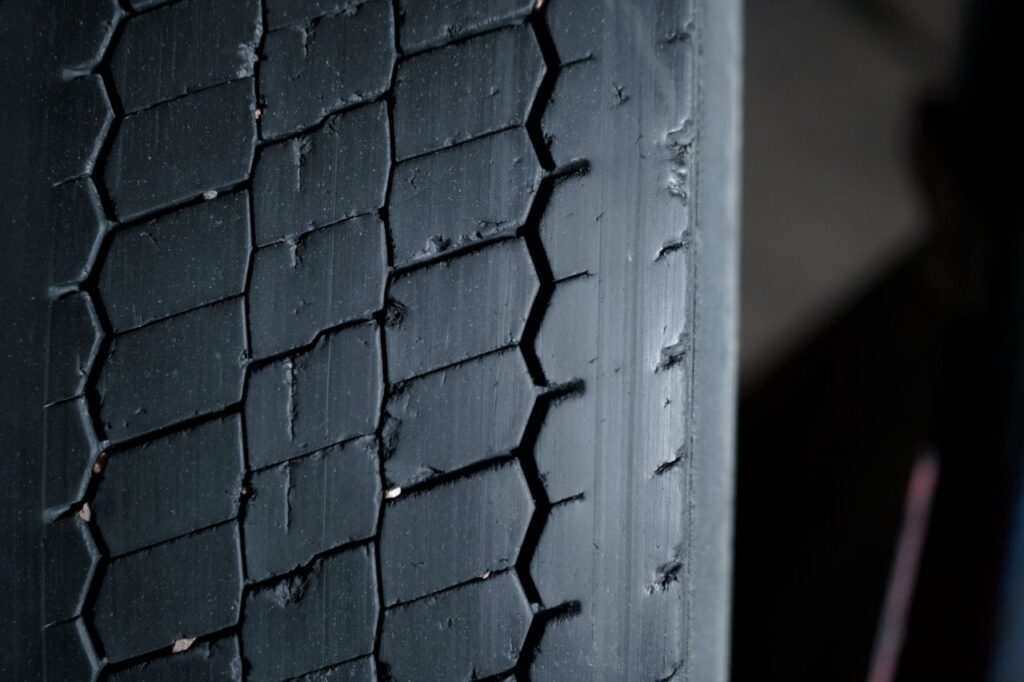
Natural Rubber
Strengths: Top choice for vibration absorption, fatigue resistance, resilience, and strong metal-bonding during vulcanization.
Limits: Continuous heat resistance up to ~200°F (~93°C).
Performance: High tear strength and durability over millions of load cycles.
Use: Most cost-effective, capable option for standard automotive and industrial mounts.
SBR (Styrene-Butadiene Rubber)
Use: Frequently blended with or substituted for natural rubber in factory passenger vehicle mounts.
Strengths: Synthetic elastomer providing superior abrasion resistance and uniform batch-to-batch consistency for high-volume OEM manufacturing.

Polyurethane
Mechanism: Resists deflection to hold the engine rigidly, unlike rubber which deflects to isolate vibration.
Performance: Reduces engine movement during acceleration, braking, and cornering; ideal for racing and high-performance applications.
Trade-Offs: Transmits significantly more engine noise and vibration to the cab, frame, and suspension, resulting in a harsher ride and noticeable idle vibration in daily drivers.
Durability: Can last the life of the vehicle (vs. 5–10 years for rubber); highly resistant to oil, chemicals, cracking, and age-hardening.

Neoprene
Chemical Resistance: Superior resistance to oil, fuel, and petroleum-based fluids, preventing the swelling, softening, and structural failure typical of natural rubber.
Performance: Maintains effective vibration isolation while withstanding harsh chemical exposure.
Applications: Ideal for marine engine mounts and industrial machinery near fuel sources and hydraulic systems.

EPDM and Silicone
Strengths: Superior resistance to weathering, UV exposure, and ozone degradation.
Applications: Ideal for outdoor equipment including generator sets, agricultural machinery, and construction gear.
Silicone Rubber
Trade-Offs: Lower tensile strength and tear resistance; strictly limited to environments where high-temperature resistance is the top priority.
Strengths: Exceptional heat tolerance, handling continuous service up to 450°F (~232°C) where standard elastomers fail.

Metal Components — Steel vs. Aluminum Housings
Strengths: Maximum strength and durability at the lowest cost.
Applications: Default choice for heavy industrial machinery and commercial vehicles.
Aluminum Housings (Billet Aluminum)
Applications: Standard in performance automotive, aerospace, and marine environments where weight savings and corrosion resistance are critical.
Strengths: ~65% weight reduction compared to steel, natural corrosion resistance, and high precision via tight-tolerance CNC machining.
Applications Across Industries
Automotive
Marine
Marine engines face constant vibration, intermittent shock loads from wave impact, a corrosive saltwater environment, and the safety-critical requirement that the engine stay in place regardless of conditions. Fail-safe mount designs are standard for inboard engines. Corrosion-resistant materials are non-negotiable: stainless steel fasteners, anodized aluminum housings, and neoprene or EPDM rubber compounds. Many marine mount manufacturers maintain classification society certifications (ABS, Lloyd’s, DNV) that verify their products meet stringent safety and performance standards.
Signs of Worn Rubber Engine Mounts
What Causes Failure?
Under normal conditions, most rubber engine mounts last 5 to 10 years or 60,000 to 100,000 miles. Harsh environments, fluid contamination, and high-performance applications shorten this range considerably.
The primary enemy of rubber engine mounts is time combined with heat. Every operating cycle subjects the mount to heat from the engine and from internal friction within the rubber. Over thousands of hours, this causes the rubber to harden, lose elasticity, and develop surface cracks that propagate under continued loading.
Oil and fluid contamination is the second most common cause of premature failure. Engine oil, power steering fluid, transmission fluid, and coolant all attack natural rubber compounds. A leaking valve cover gasket dripping onto a mount can cut its lifespan in half. Excessive engine torque from aftermarket modifications also overstresses mounts designed for factory power levels.
Common Symptoms
Excessive vibration in the cab: The most common and earliest symptom. If you feel noticeably more vibration through the steering wheel, floor, or seat than when the vehicle was newer, worn engine mounts are a likely cause. The vibration is typically most noticeable at idle.
Visible engine movement: Have someone blip the throttle while you watch the engine with the hood open. An engine on healthy mounts shows minimal movement. One on worn or broken mounts may rock visibly, sometimes shifting an inch or more under load.
Engine sitting low or tilted: A collapsed mount allows one side of the engine to sag, often visible as a slight tilt from the front. Uneven mount wear can also stress exhaust components, coolant hoses, and electrical wiring.
Clunking or banging noises: When mounts lose their resilience, the engine can shift during gear changes, hard acceleration, or deceleration. The resulting metal-to-metal contact produces distinct clunking sounds often misdiagnosed as transmission or suspension problems.
Visible rubber deterioration: Cracked, torn, bulging, or oil-soaked rubber visible during inspection is definitive evidence that the mount needs replacement. Separation of the rubber from the metal bonding surface indicates complete mount failure.
How to Inspect Your Mounts
Visual inspection: Examine each mount for cracks, tears, bulging, oil saturation, or separation of rubber from metal. Pay particular attention to the rubber-to-metal bonding area — this is the most common failure point.
Movement test: With the vehicle in park and parking brake engaged, have an assistant rev the engine to moderate RPM while you observe from a safe position. Excessive rocking or shifting indicates worn mounts.
Pry bar test: Apply gentle force to the engine near each mount point and observe deflection. A healthy mount shows modest, even deflection and returns to its original position. A failed mount shows excessive play or does not return to rest.
Our Proven Process
Our extensive experience has tested and perfected our process over the last 50 years.

Step 1
Consultation
& Design
We work closely with you at all levels to understand your needs so that we can design and deliver the right part for your unique application.

Step 2
Prototype
& Pre-production
When the design has been confirmed, we fabricate tooling, run some initial prototypes and send to you for validation and/or approval.
Step 3
Production
Once the fit and function has been proven and confirmed, we’re ready to work with you to commence a full production run.

Step 4
Delivery
When the order is complete, our warehouse team package’s and ships the product, ensuring on time delivery. We also offer warehousing services to help you manage your inventory and lead times.
Replacement Considerations
When one engine mount fails, the remaining mounts have been carrying additional load and are likely near end of life. Replacing all engine mounts at once is recommended — it ensures balanced support and isolation, and avoids the labor cost of repeated disassembly.
Choosing between OEM rubber and aftermarket polyurethane depends on your priorities. OEM rubber mounts restore factory ride quality and NVH levels. Polyurethane mounts offer longer life and better engine stability at the cost of increased vibration transfer. Match the material to your use case: comfort-oriented daily driving favors rubber; performance applications benefit from polyurethane’s stiffness.
Replacement time varies from one to four hours depending on engine accessibility. Transverse-mounted engines in front-wheel-drive vehicles typically require more labor. Some mounts require supporting the engine with a jack or engine support bar during the swap. Cost factors include mount type (standard rubber vs. hydraulic), material, and whether the application requires vehicle-specific OEM fitment or can use a universal mount.
How to Choose the Right Rubber Engine Mount
Load Capacity and Weight Rating
Start by calculating the total weight the mounts must support, including the engine, transmission, and accessories. Divide the total by the number of mounts to determine per-mount static load. Select mounts rated at 1.5 to 2 times the static load for standard applications, and up to 3 times for applications involving significant dynamic loads from acceleration, braking, wave impact, or rough terrain.
Vibration Frequency and Isolation Requirements
Effective isolation requires that the mount’s natural frequency be well below the engine’s lowest operating frequency — generally no more than one-third of the disturbing frequency. Softer mounts achieve lower natural frequencies and better isolation of low-frequency vibrations but allow greater engine movement. For engines operating at variable speeds, the mount must provide adequate isolation across the entire RPM range, which often requires a compromise between softness and positional control.
Environmental Conditions
Temperature range: Standard natural rubber operates reliably from approximately -40°F to 200°F. Neoprene extends the upper range modestly. Silicone handles continuous temperatures up to 450°F.
Chemical exposure: If the mount will be exposed to oil, hydraulic fluid, fuel, or solvents, neoprene or EPDM compounds are required.
UV and ozone exposure: Outdoor installations benefit from EPDM compounds, which resist surface cracking far better than natural rubber or SBR.
Marine and saltwater: Corrosion-resistant housings (aluminum, stainless steel) and chemical-resistant elastomers (neoprene, EPDM) are mandatory.
Mounting Configuration and Fitment
Verify stud size, bolt pattern, hole spacing, and overall dimensions against your engine and frame mounting points. Even small dimensional mismatches create installation stress that compromises service life. Common configurations include through-hole, tapped insert, and sandwich plate. OEM direct-fit mounts drop in without modification; universal mounts may require shimming or adapter plates. For non-standard applications, many manufacturers offer custom molding services.
Durometer and Hardness Selection
30A to 40A (soft): Maximum vibration isolation, significant deflection. Used where isolation is the top priority and positional precision is less critical.
40A to 50A (medium-soft): Good balance of isolation and control. Common in passenger vehicle OEM mounts.
50A to 60A (medium-hard): Reduced deflection, more vibration transmitted. Used in performance vehicles, marine engines, and industrial equipment.
60A to 80A (hard): Minimal deflection, significant vibration transmission. Reserved for racing and heavy industrial applications.