Download Our Guide: Rubber Technical References
The classification system for elastomeric materials uses specialized designations such as “2BA610 A14 C12 L14” to define critical properties across rubber components. This comprehensive coding identifies key characteristics including heat resistance requirements, oil resistance measured by volume swell, hardness requirements in Shore A, and tensile strength specifications—ensuring consistent performance across manufacturing processes.
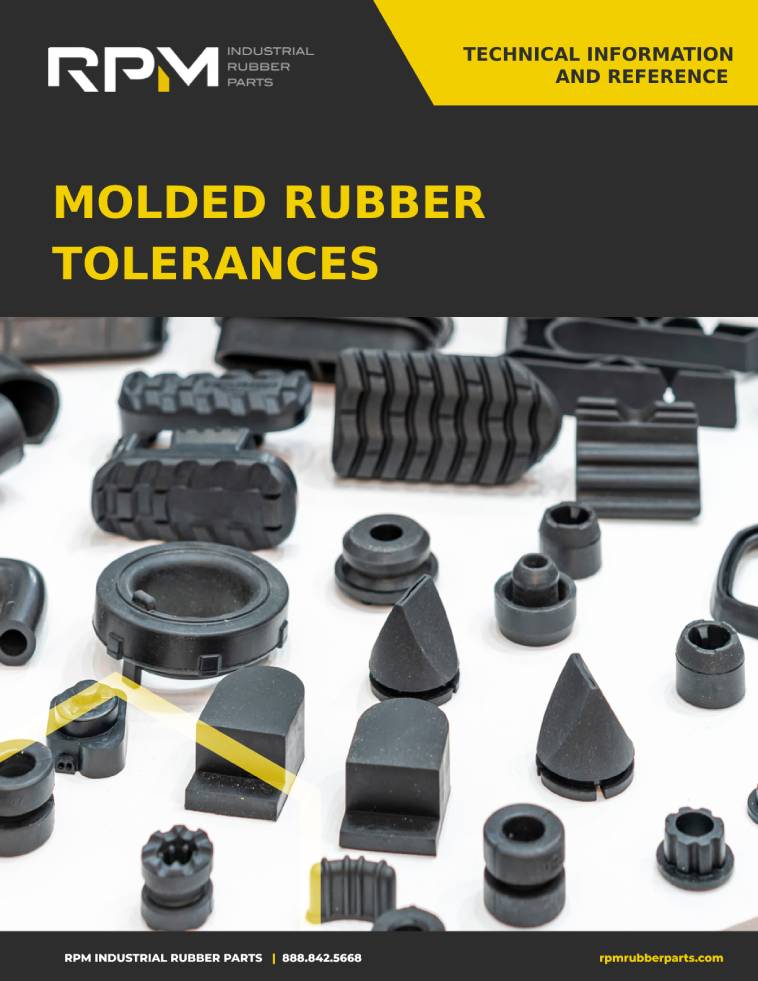
Standard dimensional tolerances for molded rubber products follow four distinct classifications, from A1 (highest precision) to A4 (cost-prioritized). The A1 designation requires expensive molds, fewer cavities per mold, and rigorous inspection procedures, while A3 represents the “commercial” standard used for most products. These classifications help manufacturers balance precision with production efficiency.
When selecting elastomers, engineers must consider temperature ranges, fluid compatibility, and comparative properties—with options ranging from cost-effective Nitriles to premium Fluoroelastomers suitable for extreme operating conditions.